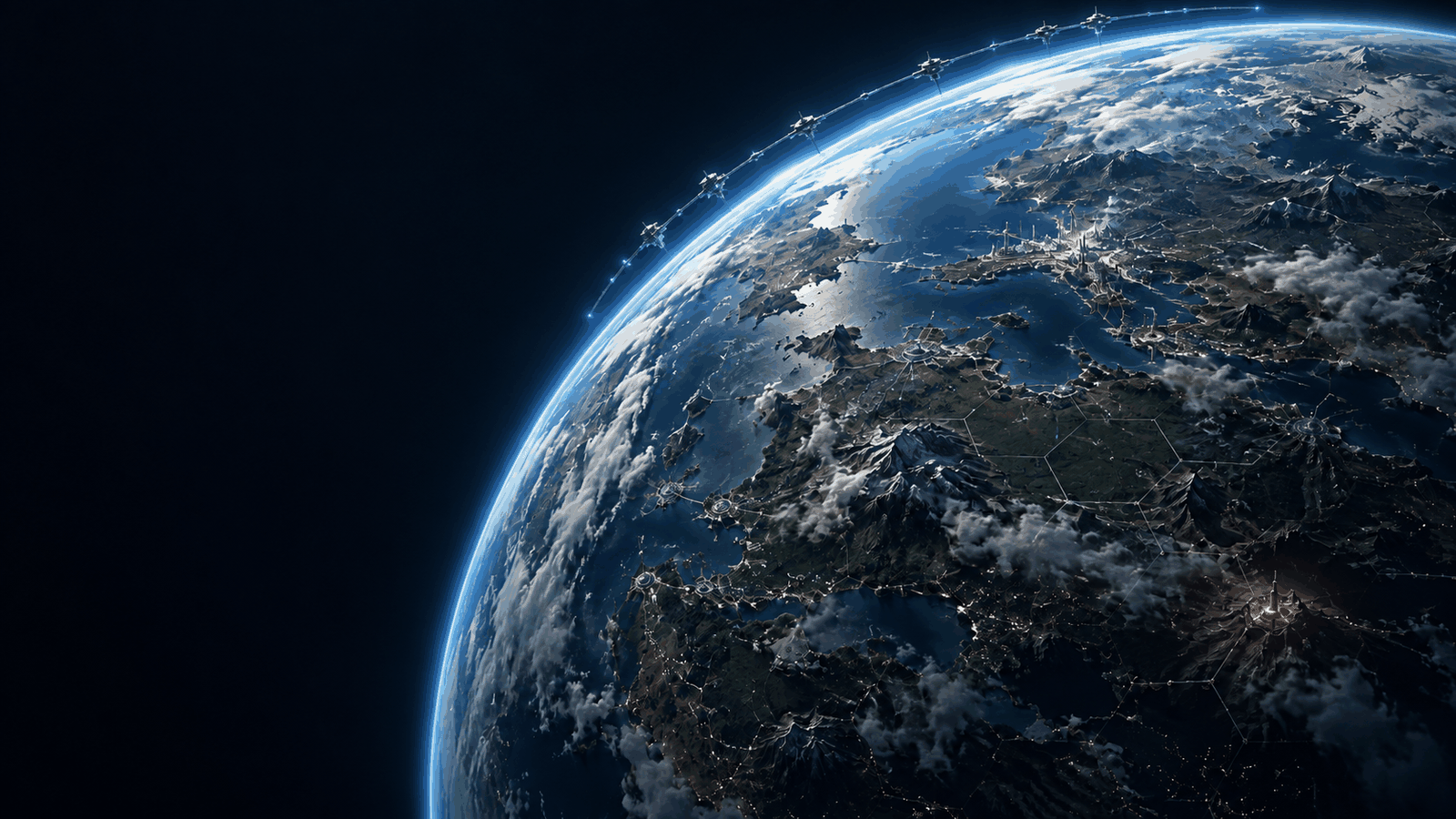
A civilisation is not a flag on a map
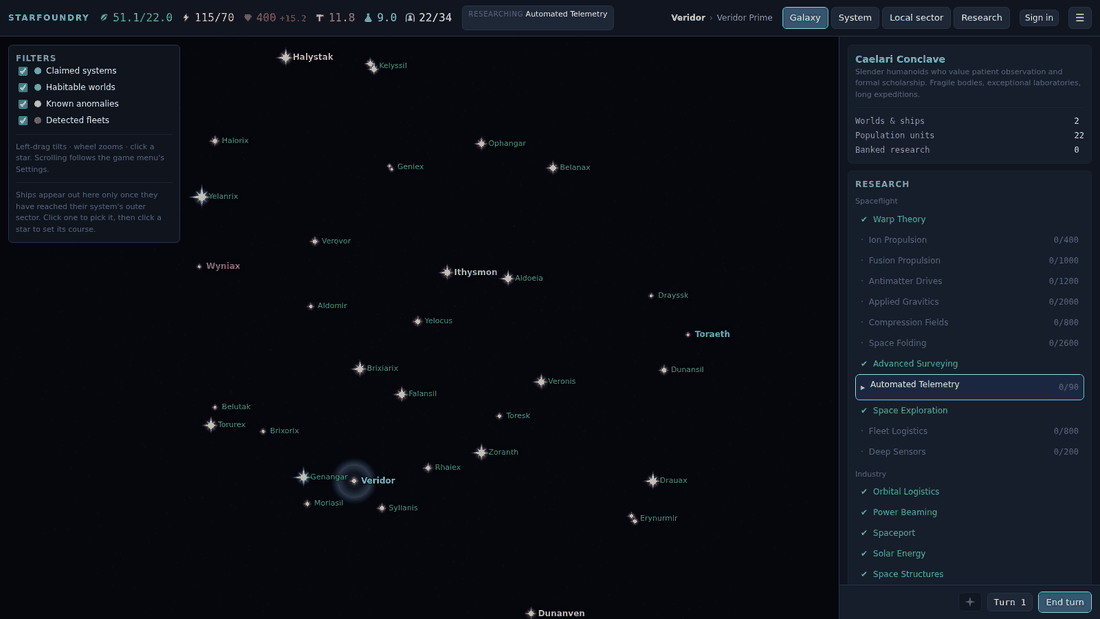
It is a few thousand people in pressurised rooms, and every one of them has to be fed, powered and taught. Starfoundry is a turn-based strategy game about actually keeping them alive.
No download. No account needed to play — sign in only if you want your saves kept on the server.
Latest update
Things that have to see out now say where they are looking
- Changed Sensor Arrays, Deep Sensor Arrays, Observatory Arrays, Power Relays, Missile Batteries, Ion Cannon and Screen Projectors each look out through one hex of their own choosing. Nothing may be built there, no build site is offered there, and you can turn them to any clear heading from the tile panel — exactly as you turn a drive.
- New Each of the seven has its own mark drawn into the hex it looks through: a dish on a stem, phased panels fanned out, a lens, a beam narrowing to its target, a hatch with the tubes standing in it, a muzzle with the bore lit, and the band a screen throws. A glance at a hull now says what every opening in it is for.
- Changed A fitting with the hull in front of it is switched off until the way is clear, the same as a drive firing into its own decks — and it says so in the panel rather than quietly working anyway. Growing a hull is now a question its own sensors and guns get a say in: to build that way, turn the fitting, or take it down first.
- Fixed Existing games are brought across: every sensor, battery, relay and projector aboard is pointed outward on load. One the hull was genuinely built round before any of this existed keeps no heading and reports itself as enclosed, which is the truth about it rather than a silent loss.
What makes it different
People, not numbers
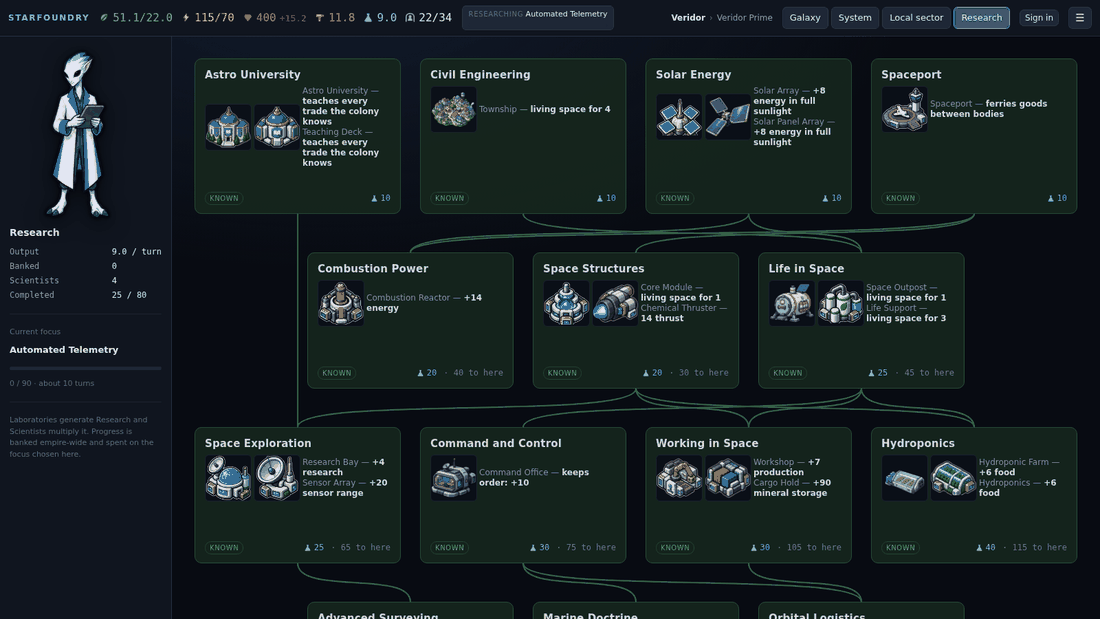
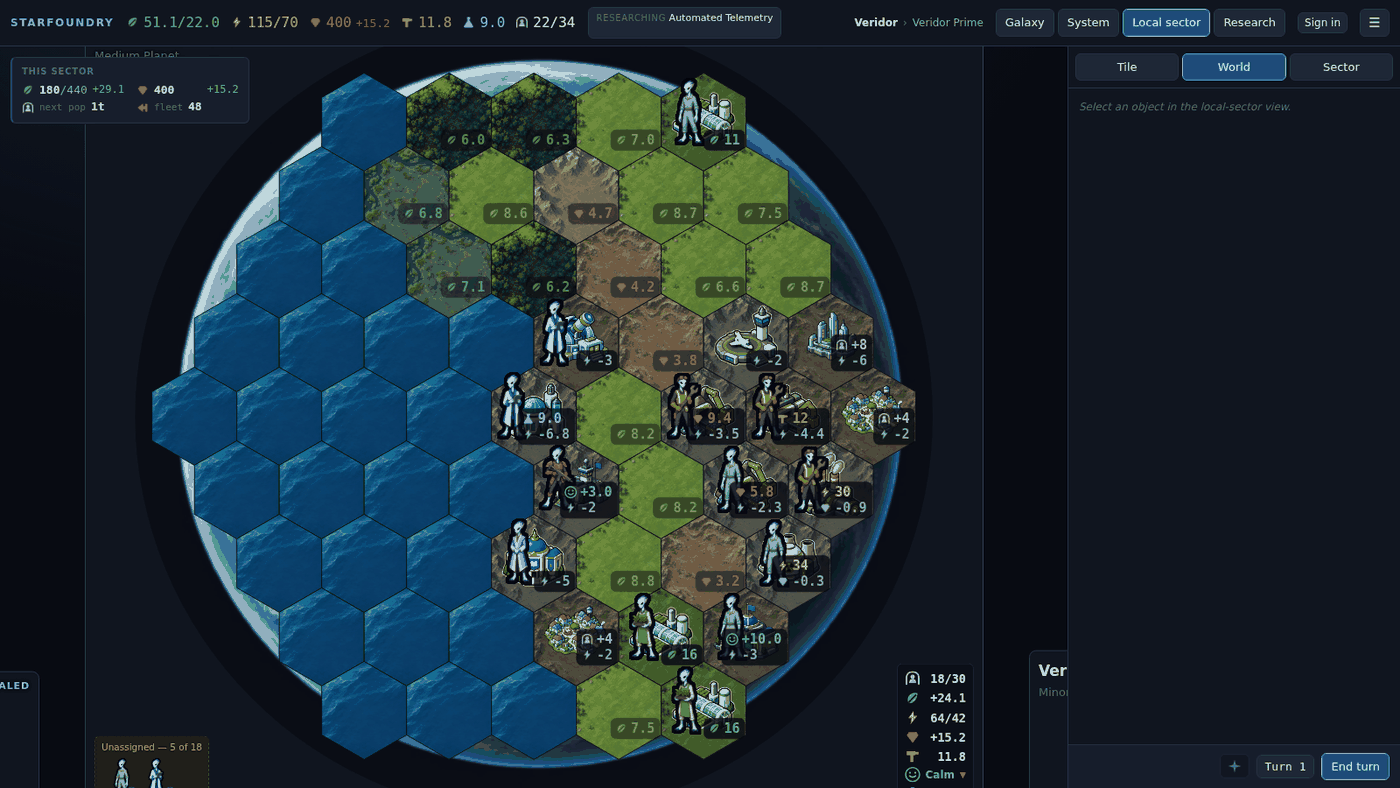
Population is individual units with trades. A scientist in a laboratory is worth more than a colonist in one, and moving them is a decision you make by hand rather than a slider you drag.
The grid is real
Power is produced, consumed and can run short. When it does, things shut down in a set order — and a built worker standing in the dark goes dormant rather than dying.
Six unlike peoples
One of them is a machine species that builds its citizens in a queue. Another lives underwater and treats dry land as the hostile ground. They are not the same game with different colours.
Ground that fights back
A moon with no air needs sealed habitation before anybody can stand on it. Terrain decides what a tile yields and whether it can be worked at all.
Getting started
Pick a people, pick how far along you want to begin — from a pre-warp world with nothing in orbit, to a developed homeworld with a ship already fitted — and play. The guide covers the first twenty turns in detail, and the peoples pages say what each one is good and bad at before you commit.
More of it